

Medically Reviewed By
Dr. Kailash KothariMD Anesthesiology, Pain Medicine, FIAPM (Pain Medicine) · 30+ years experience
- No surgery required for many conditions
- Same-day procedures
- International training & advanced techniques
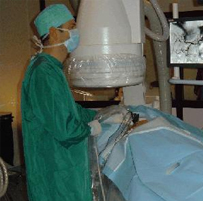
Radiofrequency ablation or lesioning is a term used when radio waves are used to produce heat to destroy tissue, usually a nerve.
It is a non-surgical option to treat your spine pain. In the case of spinal pain, radiofrequency waves are transmitted through a needle placed near the nerve under x-ray guidance. This procedure is also known as RF rhizotomy.
It is used in pain coming from facet joint, Trigeminal neuralgia, Sacro-iliac joint, herniated disc, Sympathetic chain etc.
Radiofrequency ablation therapy is one of the best procedure available till today to provide long lasting pain relief. It is very safe, done under local anesthesia, & usually requires few hours at the pain clinic.
Who is Radiofrequency Neuroablation (RFA) for?
- Patients with facet joint pain confirmed by diagnostic blocks
- Trigeminal neuralgia not responding to medication
- Knee osteoarthritis pain (genicular nerve RFA)
- Sacroiliac joint pain
- Post-herpetic neuralgia
- Patients seeking long-term pain relief without surgery
How Radiofrequency Neuroablation (RFA) is performed
- The target area is identified using fluoroscopy or ultrasound
- Local anesthesia numbs the skin and deeper tissues
- A specialized RF needle is guided to the target nerve
- Sensory and motor stimulation tests confirm correct placement
- Radiofrequency energy is applied for 60-90 seconds at 80°C
- The process is repeated for each target nerve
- The needle is removed and a bandage is applied
Before, during & after the procedure
Before: Diagnostic nerve blocks are performed first to confirm the pain source. Stop blood thinners as directed. Arrange for someone to drive you home.
During: The procedure takes 30-60 minutes depending on the number of nerves treated. You are awake or mildly sedated. You may feel warmth or pressure during the RF application.
After & recovery: Some soreness at the treatment site is normal for 1-2 weeks. Pain relief develops gradually over 2-4 weeks. Avoid heavy lifting for one week. Resume normal activities as tolerated.
Benefits of Radiofrequency Neuroablation (RFA)
- Long-lasting pain relief (6-18 months per treatment)
- Minimally invasive — performed through needles
- Can be repeated when pain returns
- No surgical incision or hospitalization
- Quick recovery — return to activities within days
- Highly effective for properly selected patients (70-80% success rate)
- Reduces need for pain medications
Risks & possible side effects
- Temporary increase in pain (1-2 weeks)
- Numbness in the treated area
- Infection (very rare)
- Nerve injury (very rare)
- Incomplete pain relief in some patients
Conditions treated with this procedure
Frequently asked questions about Radiofrequency Neuroablation (RFA)
Medical references
This page is informed by guidance from the following authoritative medical sources: