

Medically Reviewed By
Dr. Kailash KothariMD Anesthesiology, Pain Medicine, FIAPM (Pain Medicine) · 30+ years experience
- No surgery required for many conditions
- Same-day procedures
- International training & advanced techniques
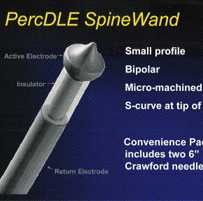
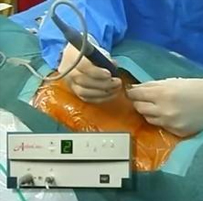
The procedure is performed under x-ray guidance to accurately place a needle into the disc. Using this minimally invasive approach, a small pathway is made into the disc and a precisely engineered device, known as a SpineWand surgical device, is then inserted through the needle into the center of the disc. The device utilizes Coblation technology to dissolve tissue while preserving nearby healthy tissue. The removal of nucleus tissue relieves pressure on the protective ring around the disc or annulus, typically allowing the bulge to recede, so that the disc no longer irritates the nearby nerve root. Normally, the entire procedure takes less than an hour, and the patient can leave the medical facility one to two hours later, with no overnight hospital stay required.
Cervical Nucleoplasty Procedure -
A cervical Nucleoplasty is performed for pain that is caused by damaged intervertebral discs. The aim of the procedure is to reduce pressure on the small nerves that are found in the annulus fibrosus (Hard fibrous covering the inner gel - nucleus). This is done by shrinking the nucleus pulposus (Centrally located gel). The modality used for this is similar to radiofrequency rhizotomies, but a device is used which utilises coblation technology to dissolve tissue without damage to nearby normal structures.
The reason why your specialist at PCI performs this procedure and not a more invasive operation is because he or she is trying to be as conservative as possible in treating your condition. The aim is to treat your symptoms without resorting to a more invasive operation.
When undergoing this procedure, you will be lying on your back on bolsters or pillows. Your specialist will use an X-ray machine to guide the needle that is used to do the procedure with. A patented plasma device is then inserted through the needle into the disc, whereby excess tissue is removed. Removing some of the tissue from the center of the disc causes a reduction in intra-discal pressure, which in turn eases symptoms.

Who is Nucleoplasty for?
- Contained disc herniation not responding to injections
- Disc-related leg pain (sciatica)
- Patients wanting to avoid open surgery
- Moderate disc protrusions on MRI
How Nucleoplasty is performed
- Patient positioned on the procedure table
- Under fluoroscopy, a specialized needle is inserted into the disc
- A nucleoplasty wand is introduced through the needle
- Radiofrequency energy is used to remove small amounts of disc tissue
- This creates channels within the disc, reducing internal pressure
- The needle is removed and a bandage applied
Before, during & after the procedure
Before: MRI evaluation to confirm suitable disc herniation. Stop blood thinners. Fast for 6 hours before the procedure.
During: Takes 30-45 minutes under local anesthesia and mild sedation. You may feel pressure but should not experience significant pain.
After & recovery: Go home the same day. Some back soreness is normal for a few days. Avoid heavy lifting for 2-4 weeks. Gradual return to normal activities.
Benefits of Nucleoplasty
- Minimally invasive — performed through a needle
- No incision or sutures
- Day-care procedure — go home the same day
- Rapid recovery compared to open surgery
- Preserves disc structure
- Low complication rate
Risks & possible side effects
- Incomplete pain relief
- Infection (very rare)
- Nerve injury (very rare)
- Disc space infection (very rare)
- May need additional treatment
Conditions treated with this procedure
Frequently asked questions about Nucleoplasty
Medical references
This page is informed by guidance from the following authoritative medical sources: