

Medically Reviewed By
Dr. Kailash KothariMD Anesthesiology, Pain Medicine, FIAPM (Pain Medicine) · 30+ years experience
- No surgery required for many conditions
- Same-day procedures
- International training & advanced techniques
The Racz Catheter Procedure (Epidural neurolysis) is used to release some of the scar tissue from around entrapped nerves in the epidural space of the spine, so that medications such as cortisone can reach the affected areas. It is used to decrease the pain caused by the scarring. This procedure is named for the physician who pioneered it, Dr. Gabor Racz.
What causes epidural scarring? - Epidural scarring most often occurs from bleeding into the epidural space following back surgery and the subsequent healing process where epidural fat is replaced with fibrotic tissue. It is a natural occurrence following surgical intervention. Sometimes scarring can also occur when a disc ruptures and its contents leak out.
How the procedure done?
A catheter is inserted in the caudal epidural space and steered up to the area of scarring. This is done in our fluoroscopy suites under sterile conditions with IV sedation.
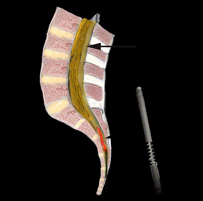
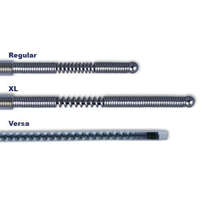
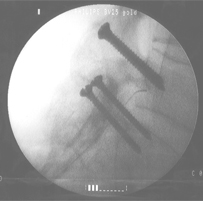
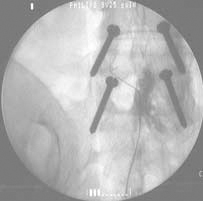
The injection consists of the following:
- A mixture of local anesthetic (such as Lidocaine or Bupivacaine)
- Steroid medication (Triamcinolone)
- X-ray contrast (Nonionic DYE) so that the scarred space can be clearly visualized
- Concentrated sterile salt solution to soften scar tissue
After the procedure you will be able to gradually get up and walk into the recovery area. Your legs might feel slightly heavy or numb. You may also notice that your pain may be gone or significantly reduced. This is due to the local anesthetic injected. Although this will last only for a few hours, driving is prohibited following the procedure that day.
Unless there are complications, you should be able to return to work the day after the procedure. The most common thing you may feel is a sore back.
How long will the effects of the medication last? - The immediate effect is usually from the local anesthetic that was injected. This effect will usually wear off in a few hours. The cortisone usually starts working in about 3 to 7 days and the effect can last for several days up to a few months.
Will the Racz procedure (Epidural neurolysis) help me? - It is very difficult to predict if the procedure will help you or not. Overall, patients who have recent scarring, such as scarring following recent back surgery, will respond better than those with more long-term scarring. Patients with leg pain and low back pain often report excellent relief of leg pain and some relief of low back pain.
Who is Epidural Adhesiolysis for?
- Failed back surgery syndrome
- Chronic sciatica not responding to standard epidural injections
- Lumbar spinal stenosis with significant epidural scarring
- Post-surgical epidural adhesions
How Epidural Adhesiolysis is performed
- Patient is positioned prone
- Under fluoroscopy, a specialized catheter is introduced through the sacral hiatus
- The catheter is navigated to the area of adhesions
- Contrast confirms adhesion location
- Hyaluronidase and saline are used to lyse adhesions
- Steroid and local anesthetic are delivered to the target area
- Catheter is removed and bandage applied
Before, during & after the procedure
Before: MRI evaluation required. Stop blood thinners. This procedure may require overnight observation.
During: Takes 45-60 minutes. Performed under fluoroscopy with local anesthesia and sedation.
After & recovery: Overnight observation may be recommended. Some discomfort at the catheter site. Pain relief develops over 1-2 weeks.
Benefits of Epidural Adhesiolysis
- Treats epidural scarring and adhesions
- Delivers medication to previously inaccessible areas
- Effective for failed back surgery syndrome
- Minimally invasive alternative to revision surgery
- Can significantly improve mobility and function
Risks & possible side effects
- Temporary increase in pain
- Headache from dural puncture (rare)
- Infection (rare)
- Nerve irritation (temporary)
- Catheter complications (rare)
Conditions treated with this procedure
Frequently asked questions about Epidural Adhesiolysis
Medical references
This page is informed by guidance from the following authoritative medical sources: